I spent close to two years on growth at Equip9, a marketplace for construction equipment, and later nine months on a business transformation at MCCS Infra, an infrastructure and construction company. One job sold to the sector and the other worked inside it. Between them they showed me how differently construction buys from the rest of the economy.
The size of the machine market
The Indian Construction Equipment Manufacturers Association (ICEMA) reported sales of 1,40,191 machines in FY25, up 3% from 1,35,650 in FY24. Domestic sales grew only 2.7%, and exports, up about 10%, carried the year. ICEMA describes India as the world's third largest construction equipment market.
| Segment | FY25 units |
|---|---|
| Earthmoving equipment | 99,159 |
| of which backhoe loaders | 53,133 |
| of which crawler excavators | 35,816 |
| Material handling | 17,050 |
| Concrete equipment | 14,473 |
| Road construction | 7,002 |
| Material processing | 2,507 |
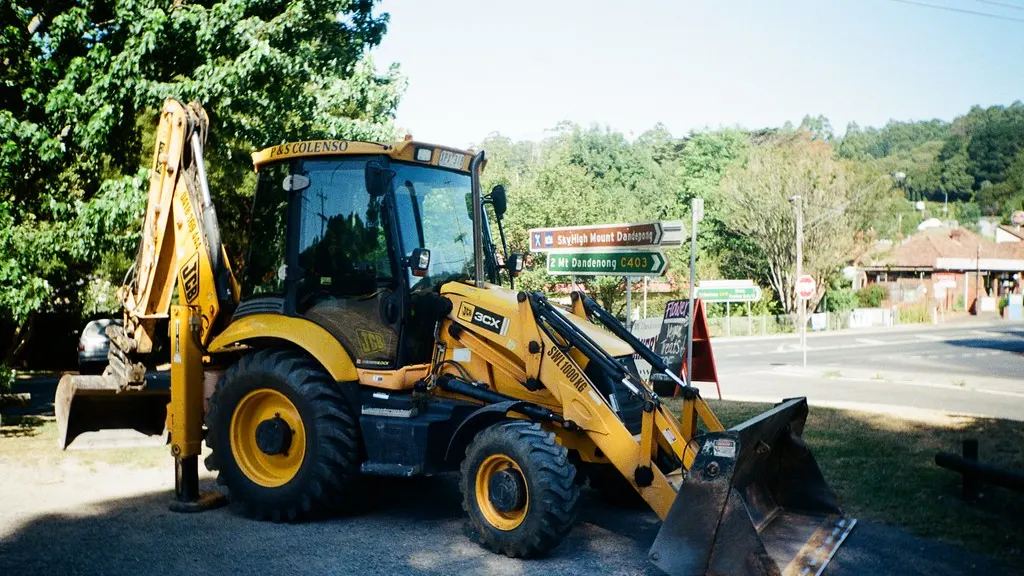
Earthmoving is 71% of all units, and the backhoe loader alone is 38%. It is a general purpose machine that one owner can keep busy across very different sites, which makes it the natural unit of a small rental business.
Who owns the machines
Most machines are not bought by the contractor that ends up using them. Off-Highway Research data, reported by International Rental News, puts about two thirds of Indian construction equipment sales into the rental channel. The rental side is fragmented, made up of small private and regional owners, with no large national chain.
A common transaction looks like this: a site manager needs an excavator for two weeks and calls owners they know until one has a machine free. Price, availability and the quality of the operator are all settled on the phone. That is the gap construction marketplaces are built to close, and it is harder than it looks, because the phone call comes with a relationship and a marketplace starts without one.
A marketplace here has two customers with little in common
The first thing Equip9 taught me is that a contractor renting a machine for a week and an owner listing a fleet want different things. The contractor wants a machine that is available now, at a known price, with an operator they can trust. The owner wants machines that are expensive to leave idle to stay busy. We had been running one message at both audiences, and a large share of the spend was reaching the wrong half.
Rebuilding acquisition around segments, each with its own message and funnel, improved lead conversion by 40% and helped drive 300% profit growth. Sales capacity was the real bottleneck, so we optimised for lead quality: more weak leads would only have slowed the sales team down. I also owned branding and client delivery across 15+ accounts, which generated ₹30L+ in annual revenue.
Content had its own bottleneck. Every segment needed its own material, and producing it by hand did not scale, so I built a content engine with AI workflow agents that halved production turnaround. It was the first time I saw AI move an operating metric directly.
The buyer side, seen from inside a construction company
At MCCS Infra the problem sat on the other side of the market. Construction companies carry their cost base in people and idle capacity, and they tend to hire when a project lands, paying a premium for speed. We rebuilt capacity planning against the actual project pipeline, redesigned hiring and resource allocation, and opened a digital inbound channel with a brand overhaul.
Hiring turnaround fell 80% and cost per hire halved. Inbound enquiries rose 4.5 times, and the manpower restructuring saved ₹2 Cr. A contractor that plans capacity against its pipeline can also see its equipment needs weeks ahead, and that forward demand is exactly what an equipment marketplace wants to capture before the phone calls start.
What a marketplace in this sector has to get right
- Verified availability. A listing that turns out to be booked sends the buyer straight back to the phone.
- Information about the operator, since the person running the machine decides how the job goes.
- Separate funnels, messages and pricing for owners and renters.
- A way to fill an owner's idle weeks, which is the real product on the supply side.
- Payment terms that fit how contractors get paid, which is often late and in stages.
The same shape, a fragmented local supply side and a buyer who trusts a phone number, shows up well beyond construction. I pulled the pattern together in a thesis on tier-2 India.